


The AEC’s electoral commissioner has told a joint select committee that while the AEC might want more powers to combat AI in electoral advertising, exercising such powers could prove a challenge to the commission’s impartiality.
“We feel that that would put our impartiality at significant risk,” Jeff Pope, the electoral commissioner, told the joint select committee on artificial intelligence on Wednesday (14 October).
“I think there is a risk that the more we are asked to regulate and to make judgment, then there is a risk that around that impartiality being challenged. And that is something that I would ask Parliament to consider very deeply when it’s considering giving us further responsibilities or whether it sits with other agencies that don’t need to grapple with that very fine-tuned impartiality.”
Pope also addressed the challenge of labelling deepfakes and other AI-generated content, telling the committee that while more powers to manage the “contemporary information environment” would be useful, such powers could only go so far.
“I think there [are] some challenges in that, and I think the challenge with that is if AI is not already ubiquitous – it’s not far away,” Pope said.
“And I think if you’re labelling everything with AI, then I think probably the next election or not too long thereafter, every bit of political communication could have an AI label on it. And you’ve got to wonder about the effectiveness of that.”
Pope went on to explain that while AI is certainly having an impact, it’s more as an amplifier and accelerator of existing threats, such as misinformation and foreign influence.
“But thankfully, so far, our elections have been absent of any form of foreign interference,” Pope said.

The global view
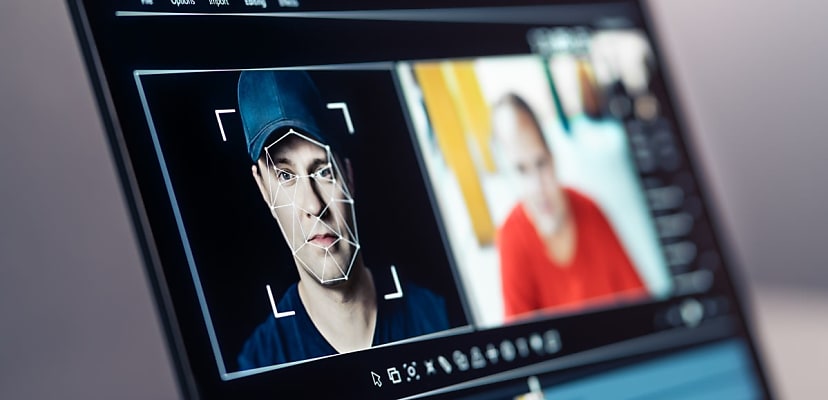
The airing of the AEC’s concerns about AI in political discourse is backed by new research illustrating the global rise in election-related deepfakes.
Election-related deepfake incidents rose 27 per cent globally in 2026, though the distribution of those incidents is remarkably uneven.
According to data published by cyber security firm Surfshark, the United States reported the greatest rise in deepfakes, with 87 incidents reported in the year to date. In fact, the US made up 37 per cent of all reported incidents, making it easily the global leader.
India followed, with 19 reported incidents, trailed by South Korea, Taiwan, and Brazil.
And while the AEC is rightly concerned about the impact of deepfakes on the Australian electoral process, Surfshark found only three in the country, alongside one in New Zealand.
Regardless of the relatively low local numbers, Dr Luís Costa, research lead at Surfshark, said election deepfakes are no longer an “occasional incident”.
“The reason is simple: making a convincing fake video used to take a studio, and now it takes an app and a few minutes,” Costa said in a statement.
“The same tactic now appears in local races as well as national ones. Most of this material spreads through social media, where a clip can reach millions of people long before anyone verifies it. These fakes thrive on social media because they are built to trigger an emotional reaction that bypasses our critical thinking.
“If a video of a candidate surprises you, check whether an established news outlet is reporting on it, and if none is, wait before spreading it further. The clips designed to change your vote are the ones built to make you angry enough to skip that step.”
 Want to see more stories from trusted news sources?
Make Cyber Daily a preferred news source on Google.
